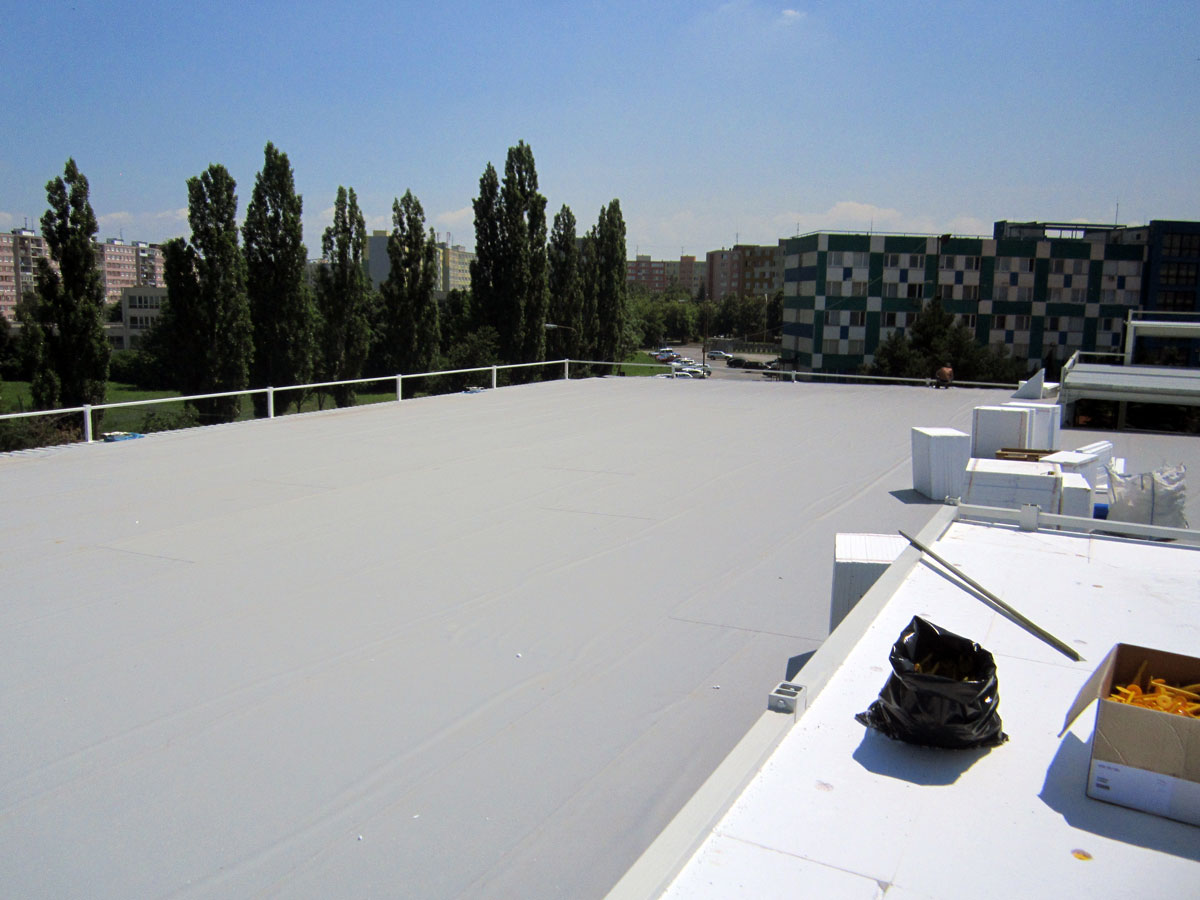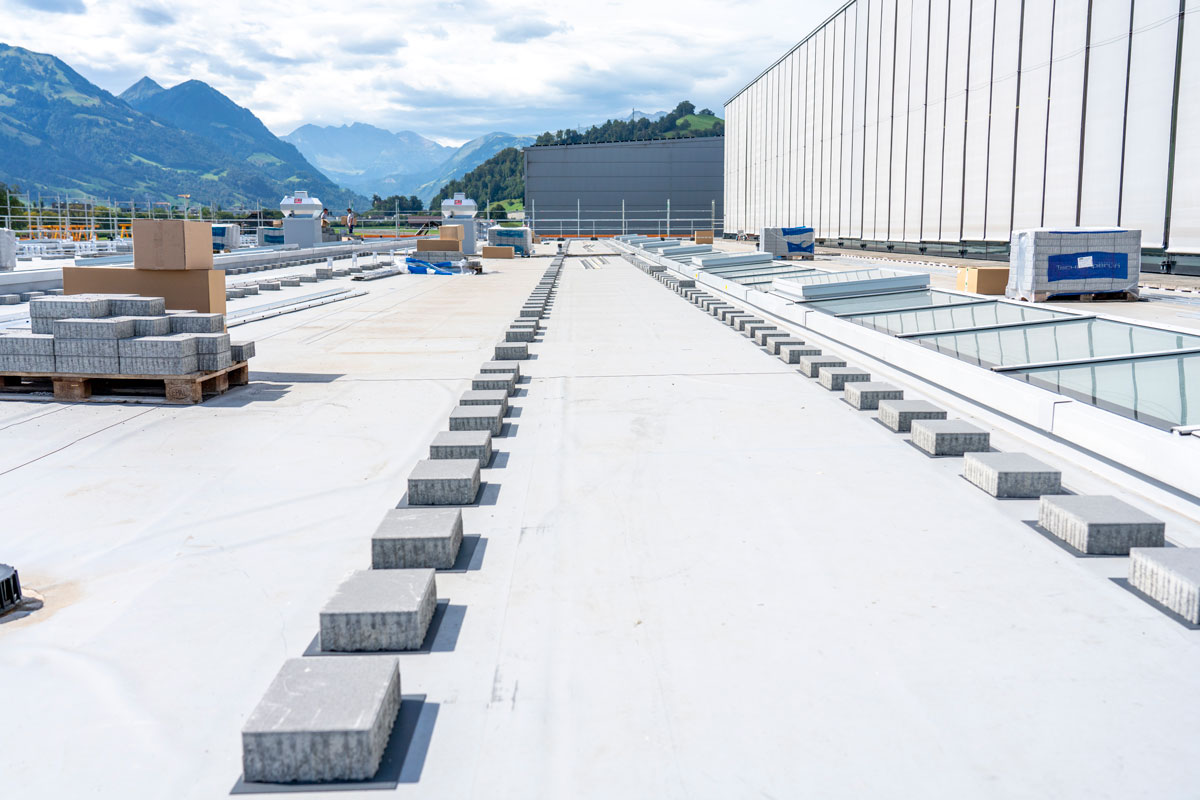
Flat roofs
Flat roofs today are no longer merely affordable alternative solutions, but part of future-oriented architecture that increases the functionality of buildings.
Due to the increasing effects of climate change, flat roofs must meet ever greater requirements, which is why high-quality selected sealing materials with a long service life and their correct installation are essential. Therefore, flat roof covering must be well selected, designed and installed. An appropriate membrane, waterproofing and thermal roof insulation must be selected and arranged.
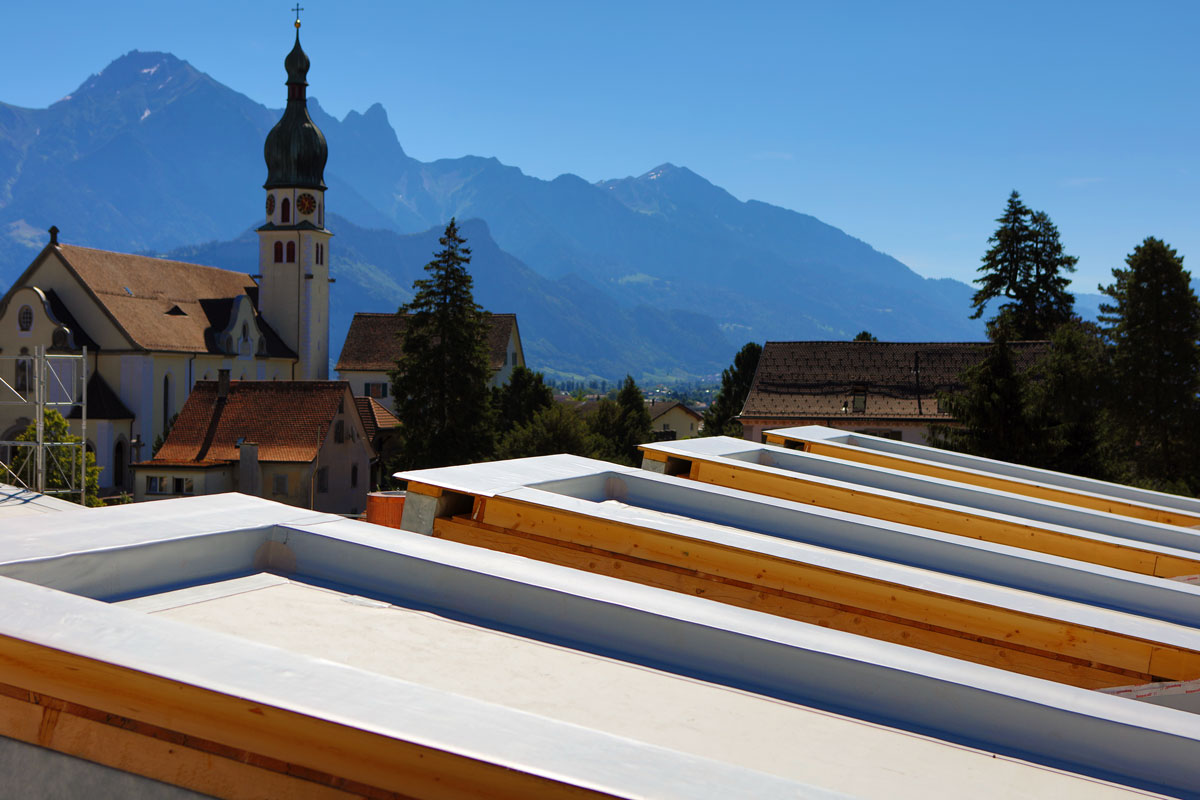
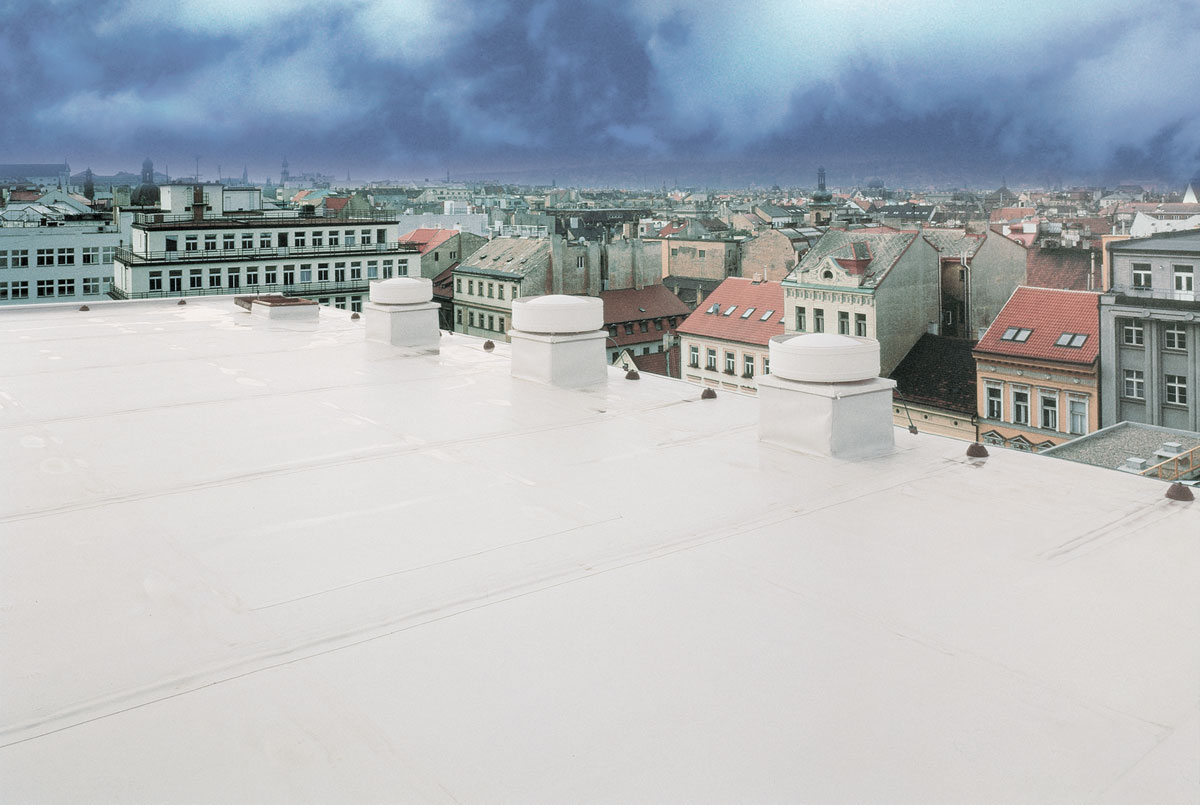
A flat roof is understood as a multi-layer roof with a pitch of up to 5°, which, due to numerous building-physics influences, is the most exposed part of buildings. According to the usability of the roof surface, we distinguish between: unused roof surfaces, which are walkable only for general maintenance, and used (usable) roof surfaces, intended for people to stay on or for traffic needs, which also include green and vegetated roofs.
Flat roofs are characteristic mainly in the construction of industrial buildings, but they are increasingly found in individual construction as well, as they offer unique solutions.
Our programme includes the sale of high-quality membranes from recognised manufacturers. We offer a complete selection of materials, accessories and equipment for high-quality flat roof installation.
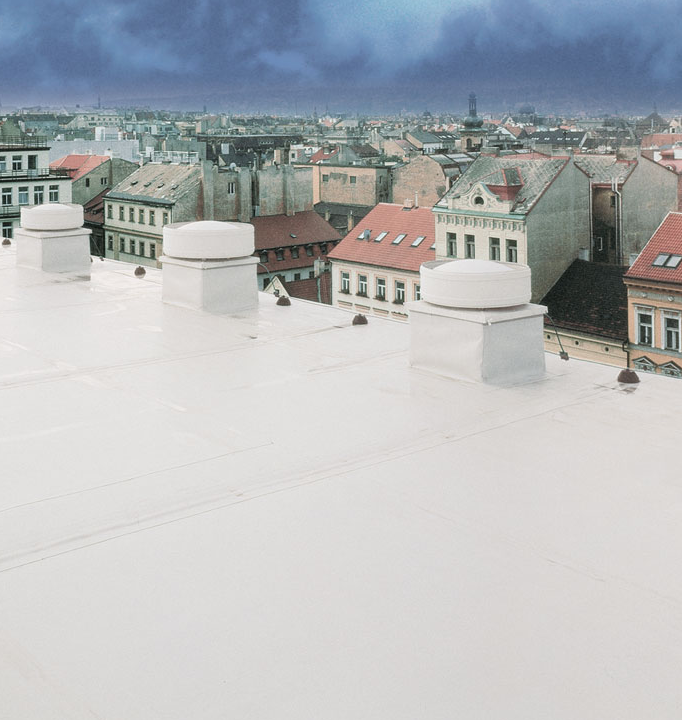
Flat roofs are divided into cold, warm, inverted or semi-inverted, and green roofs.
UNVENTILATED (WARM) ROOFS
Unventilated (warm) roofs consist of a load-bearing structure, a slope and substrate levelling layer, a layer for equalising vapour pressure, a vapour barrier, thermal insulation, waterproofing with an equalising layer, and a layer for protecting the waterproofing surface.
VENTILATED (COLD) ROOFS
Ventilated (cold) roofs consist of a load-bearing structure, thermal insulation, an air cavity (ventilated), and an upper load-bearing structure with waterproofing.
INVERTED OR SEMI-INVERTED ROOFS
They have a layer of thermal insulation above the waterproofing. This protects the waterproofing from temperature fluctuations and UV rays (greater durability). The inverted roof system is very suitable for renovating worn flat roofs, thereby improving their thermal insulation and installing new waterproofing.
GREEN OR VEGETATED ROOFS
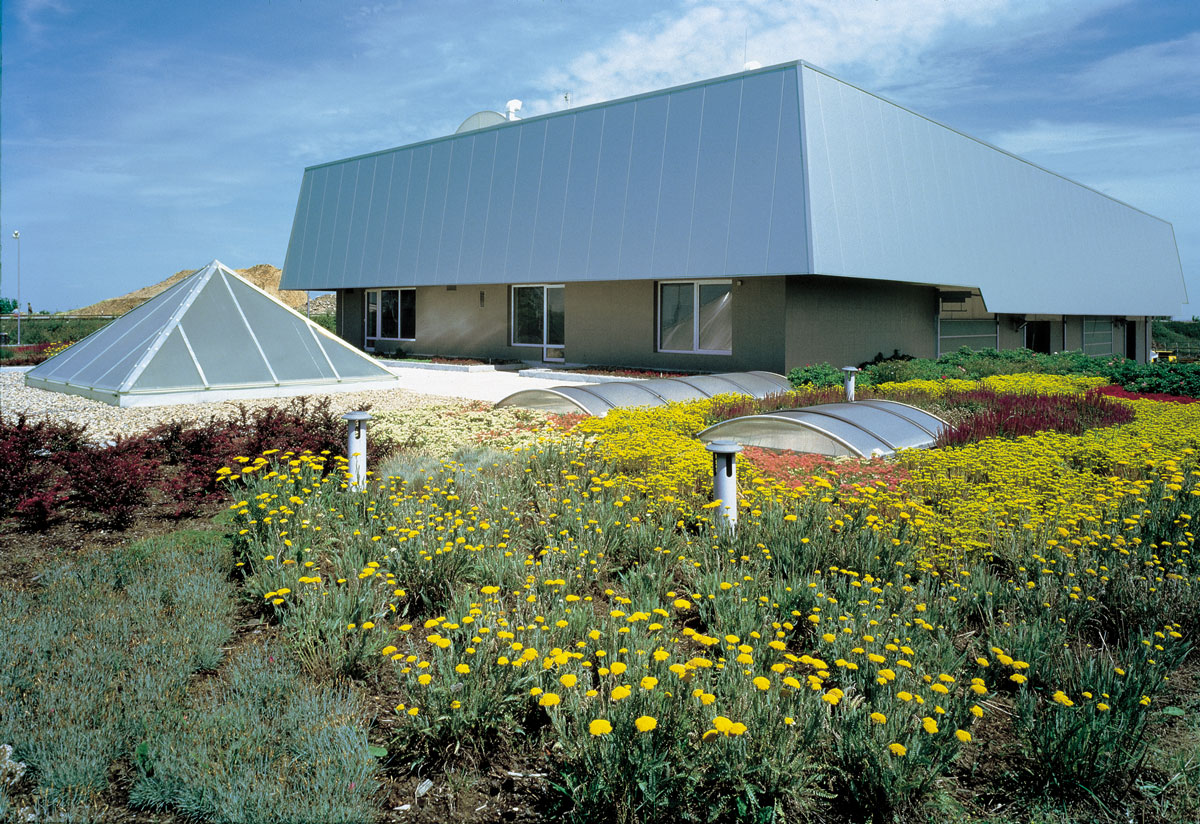
Green or vegetated roofs have, above the waterproofing, accessories that protect it against root penetration, a drainage layer followed by a filter layer, and a growing substrate. Green roofs are also called ecological roofs, as they represent very useful additional green areas in densely populated settlements.

Permanent stock of premium manufacturers of products for flat roofs
PVC roofing membranes
(SIKA, BAUDER, ipd.)
PVC roofing membranes are multi-layer synthetic roofing membranes reinforced with polyester, based on polyvinyl chloride (PVC).
Advantages:
UV stability of the membrane, resistance to point loads such as hail, various fastening methods (mechanical, welding).
FPO/TPO roofing membranes
(SIKA, BAUDER, ipd.)
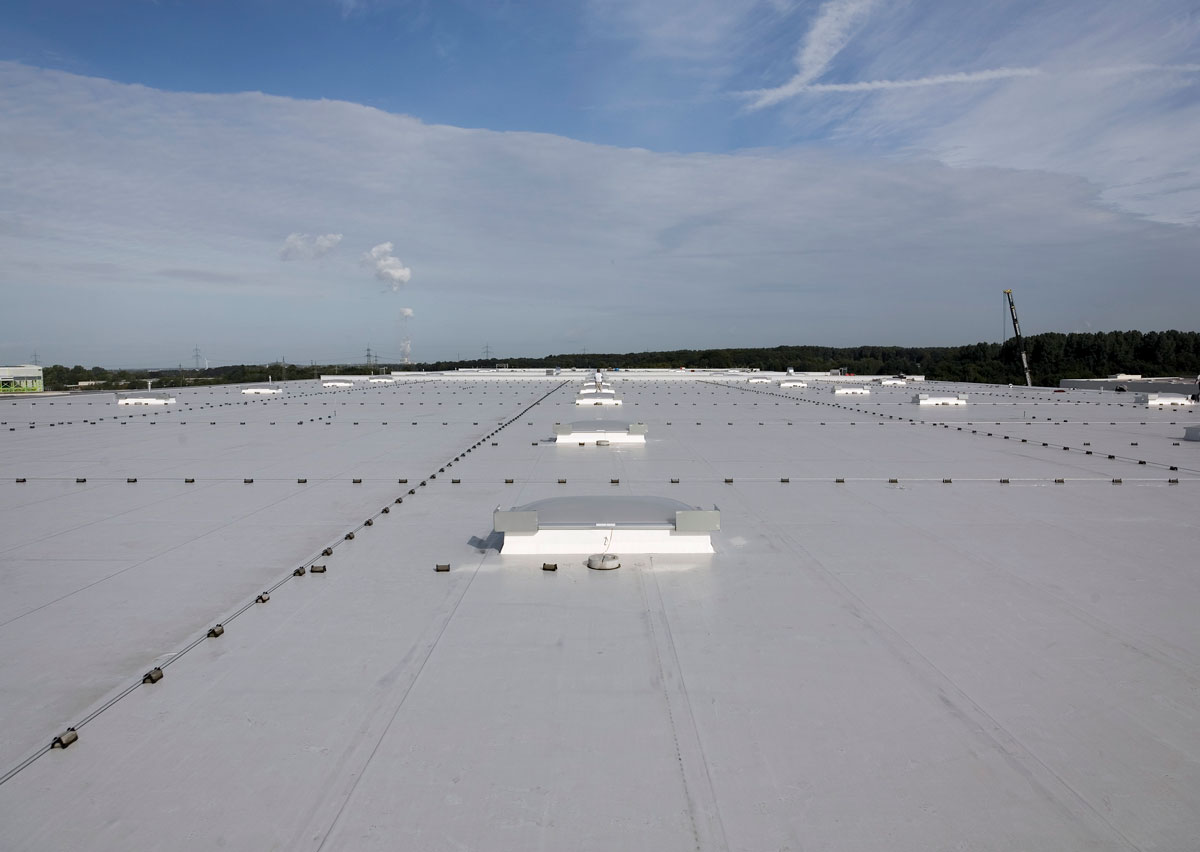
FPO roofing membranes are multi-layer synthetic roofing membranes made based on flexible polyolefin, known on the American market as TPO roofing membranes. To ensure a longer service life and dimensional stability, they are reinforced with polyester mesh and a layer of glass fibres. The membranes are suitable for direct exposure to weather conditions and for use in all climatic conditions. They can be used for mechanically fastened and ballasted roofs.
Advantages:
UV stability of the membrane, resistance to point loads such as hail, possibility of different fastening methods (mechanical, welding), dimensional stability.
Liquid membranes
(ENKE, SIKA, BAUDER, TRIFLEX)
Liquid membranes are a versatile, ideal solution for flat roofs with many joints and various penetrations (ventilation shafts, air-conditioning installations, etc.) and complicated details. They can be used for new buildings as well as for renovating existing roofs. Due to their versatile adhesion, they can be applied to existing roofs without prior removal of the original roofing. They can also be used as a material for waterproofing floors on balconies.
Bituminous membranes
(FRAGMAT, SIKA, BAUDER, ipd.)
Bituminous membranes are still the most commonly used material for waterproofing flat roofs. In a classic flat roof, they are installed above the thermal insulation, while in an inverted flat roof the waterproofing is below the thermal insulation. We can choose a classic installation with standard bituminous membranes or high-quality membranes.
Gallery